Beyond the Expected: Unique Wedding Design Ideas That Rethink the Traditional Wedding
There is a familiar formula to wedding design.
Rows of chairs lead to an aisle. An arch marks the ceremony altar. Cocktail hour follows. Guests enter a reception filled with round or rectangular tables, floral centerpieces and a dance floor positioned somewhere in the middle.
There is absolutely nothing wrong with any of those things. Beautiful weddings have been created using that formula for decades.
But it isn't the only way to design a wedding.
Some of the most memorable weddings begin when we stop asking, What are we supposed to put here? and start asking, What could this space become?
Unique wedding design isn't necessarily about finding an idea that has never existed before. With millions of weddings taking place around the world, that's a nearly impossible standard. Instead, it's about creating an experience that feels unexpected, intentional and deeply connected to the couple and the space around them.
Sometimes that means reimagining the floor plan. Sometimes it's transforming an architectural feature everyone else would have ignored. It can mean eliminating the traditional ceremony arch entirely, building an environment where there wasn't one before or turning something completely functional into the most memorable design element of the wedding.
If you're searching for unique wedding ideas that go beyond changing your color palette or choosing a different centerpiece, start here.
Full-Service Wedding Planning / Wedding Design Services
1. Let the Reception Layout Become Part of the Design
Wedding reception layouts are typically approached as a logistical problem first: How many tables do we need, and where can we fit them?
But your floor plan can do much more than seat your guests.
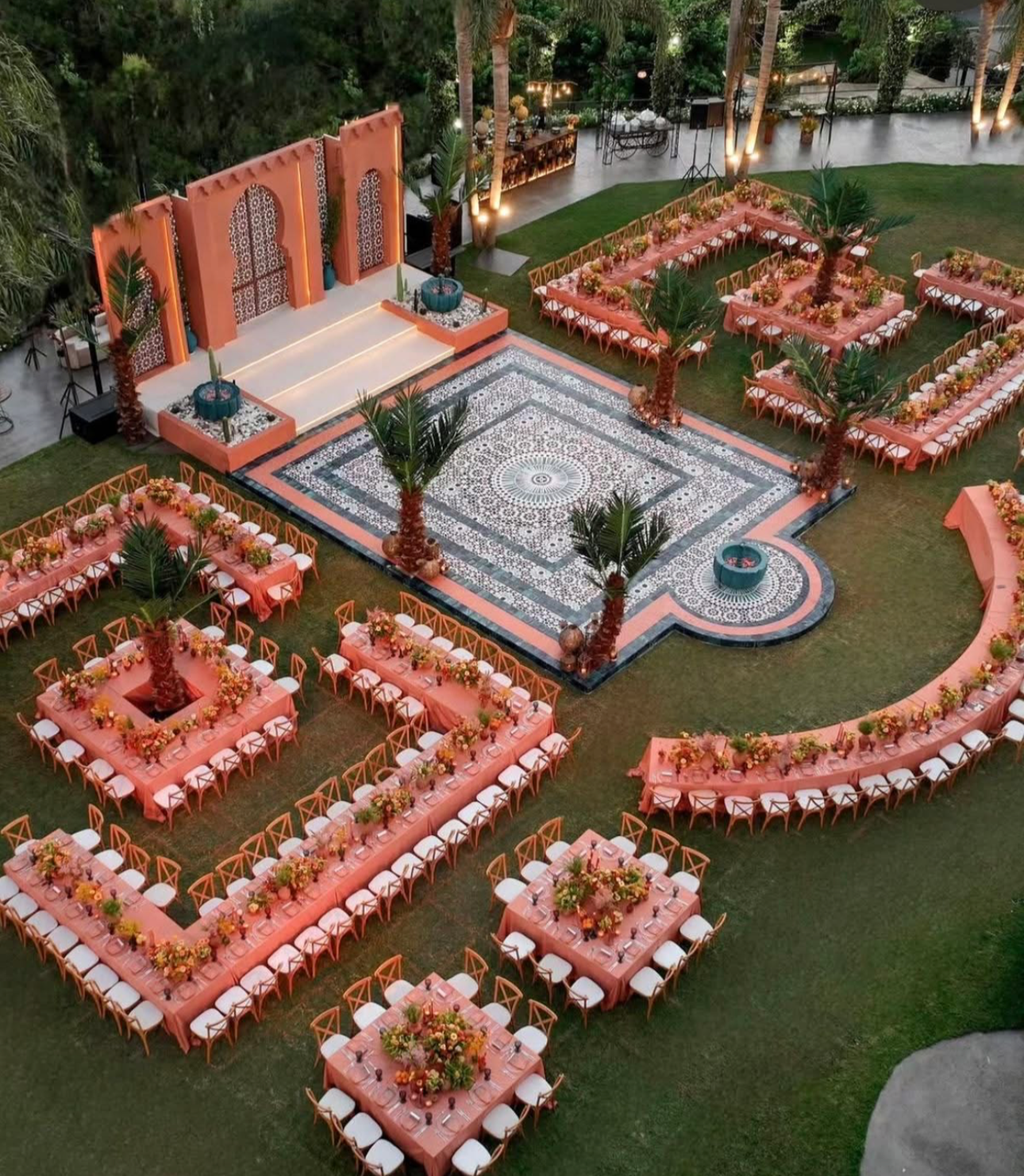
Instead of automatically filling a reception space with identical rounds or rows of rectangular tables, consider the overall composition from above. Long tables can intersect to form geometric arrangements. Tables can wrap around trees or architectural features. Curved and serpentine tables can soften large spaces. Multiple configurations can be layered together to create visual movement throughout the reception.
The result is a reception where the furniture itself becomes part of the design.
This approach is especially impactful for outdoor weddings, estate weddings and large open lawns where traditional table arrangements can sometimes feel disconnected from the scale of the property.
There is also no rule saying every guest needs to sit at the exact same style or shape of table. Mixing long tables, rounds, curves and custom configurations can create distinct areas while still feeling cohesive when the linens, chairs, florals and tabletop details connect everything visually.
The important part is that an unconventional wedding layout still needs to function. Guests need enough room to move comfortably, catering needs service pathways and sightlines to important moments should be considered.
Creative doesn't have to mean chaotic.
The best layouts accomplish both.
2. Turn a Functional Element Into a Statement
When couples think about creating a statement moment at their wedding, the instinct is often to add something.
More flowers. A larger installation. Another decorative structure.
But sometimes the strongest design choice is transforming something you already need.
A dance floor is a perfect example.
Instead of treating the dance floor as an empty square waiting for guests to arrive, it can become one of the primary visual anchors of the reception. Custom patterns, painted designs, monograms, unexpected shapes and motifs inspired by architecture or the wedding location can turn an ordinary functional surface into a piece of art.
The same thinking can be applied throughout a wedding.
A bar can become an installation. A seating chart can become part of the architecture. A catering station can become an experience. A staircase can become a focal point. Even pathways between different parts of the wedding can be intentionally designed.
Before adding another decorative element, ask:
What already needs to exist, and how could we make it extraordinary?
That question can completely change the way a wedding is designed.
3. Create an Entrance, Not Just an Entryway
Transitions are one of the most overlooked opportunities in wedding design.
Guests don't simply experience a ceremony and a reception. They move through a sequence of spaces throughout the day.
They arrive.
They enter the ceremony.
They transition into cocktail hour.
They discover the reception.
They move toward dinner.
They find the dance floor.
Each transition creates an opportunity to shift the atmosphere and reveal something new.
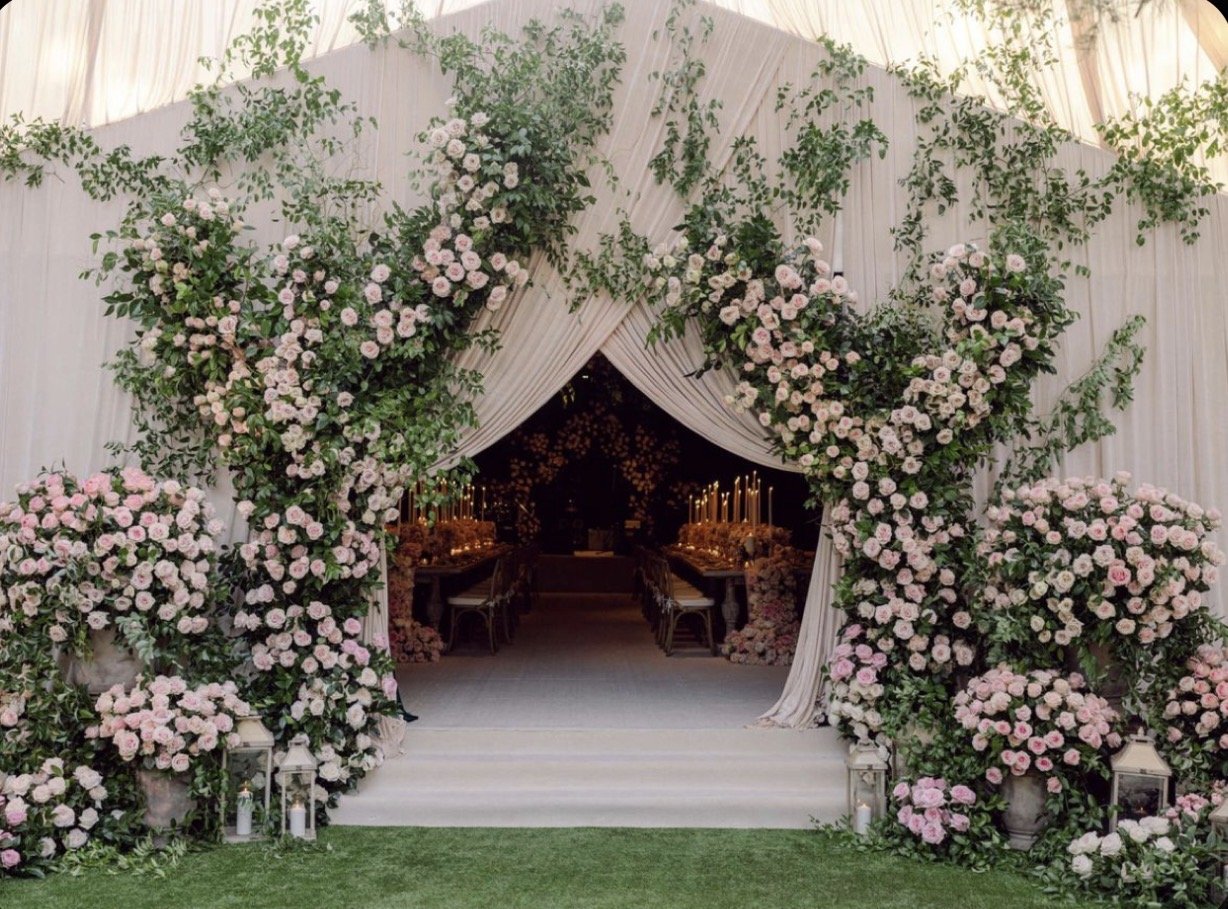
A reception entrance surrounded by abundant florals, greenery, draping or candlelight immediately signals that guests are entering another environment. Instead of simply walking through a doorway, they experience a reveal.
This is especially effective when the reception interior has a dramatically different atmosphere from the ceremony or cocktail hour.
Imagine leaving a bright outdoor ceremony and stepping through layers of flowers and fabric into a candlelit dinner.
That transition becomes part of the memory.
And it doesn't always require enormous floral installations. Draping, lighting, architectural panels, plants, candles or thoughtful styling can completely change how an entrance feels.
The goal isn't simply to decorate the doorway.
It's to create anticipation for what exists on the other side.
[INTERNAL LINK: Related Vision & Veil Article About Wedding Guest Experience or Reception Design]
4. Build the Venue You Wish You Had
One of the biggest misconceptions about wedding planning is that the venue has to provide the entire aesthetic.
It doesn't.
Sometimes the venue is simply the canvas.
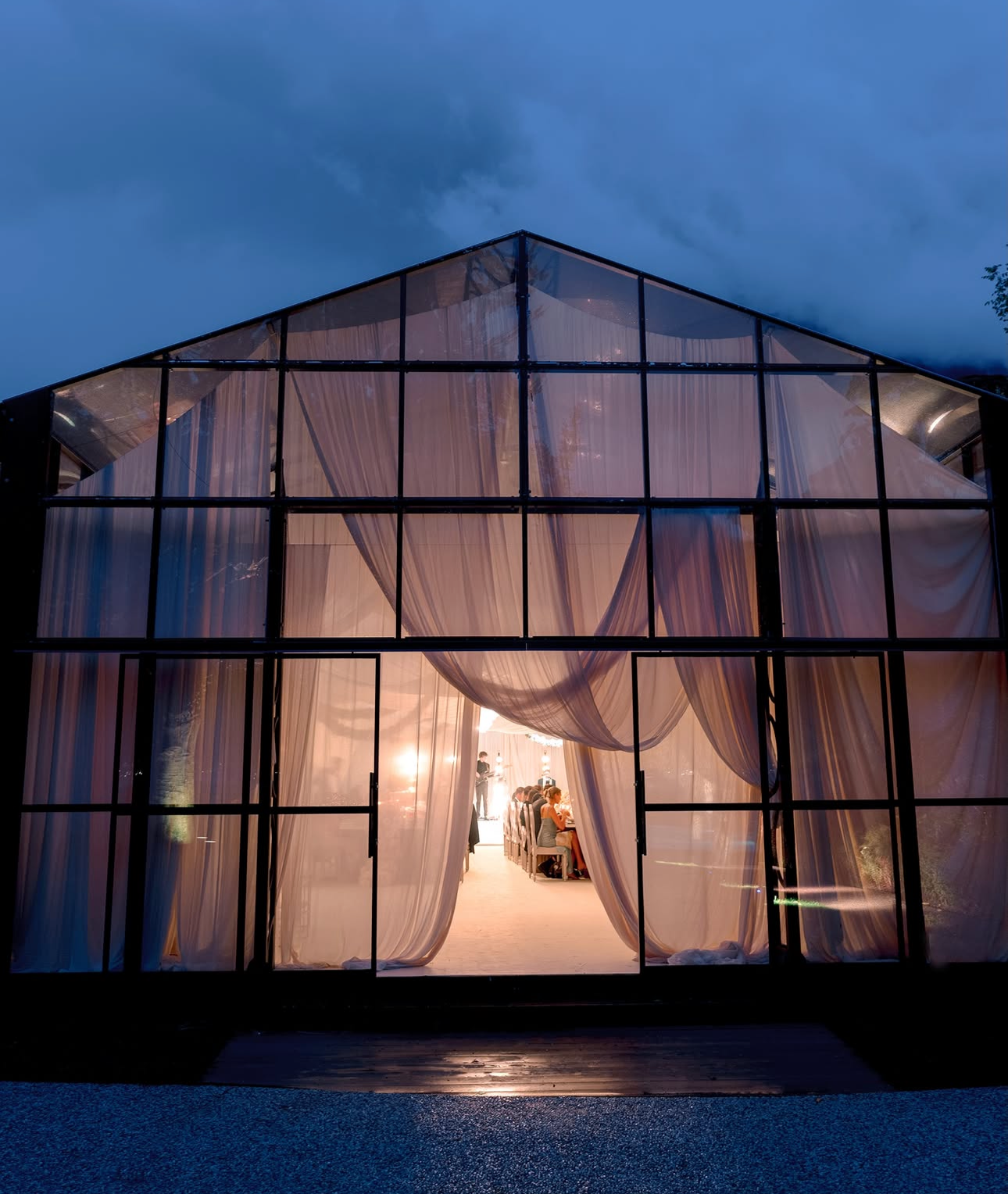
Temporary structures, clear-top tents, glass houses, custom flooring, draping, lighting and architectural installations can transform open land into a completely different environment.
A garden can become an intimate European-inspired dining room.
An empty lawn can become a candlelit conservatory.
A blank tent can become a dramatic, layered interior that feels completely removed from the landscape surrounding it.
This opens up an entirely different way of thinking about venue selection.
Instead of only asking, Does this venue already look exactly like my wedding? couples can also ask, Does this property give us the space and freedom to create what we want?
Of course, building an environment comes with additional logistical considerations. Power, flooring, weather, permitting, restrooms, catering access, lighting and rental costs all have to be considered before falling in love with the concept.
But when the budget and property allow for it, temporary architecture gives couples an incredible amount of creative freedom.
You're no longer simply decorating a venue.
You're creating one.
5. Design With the Landscape Instead of Competing With It
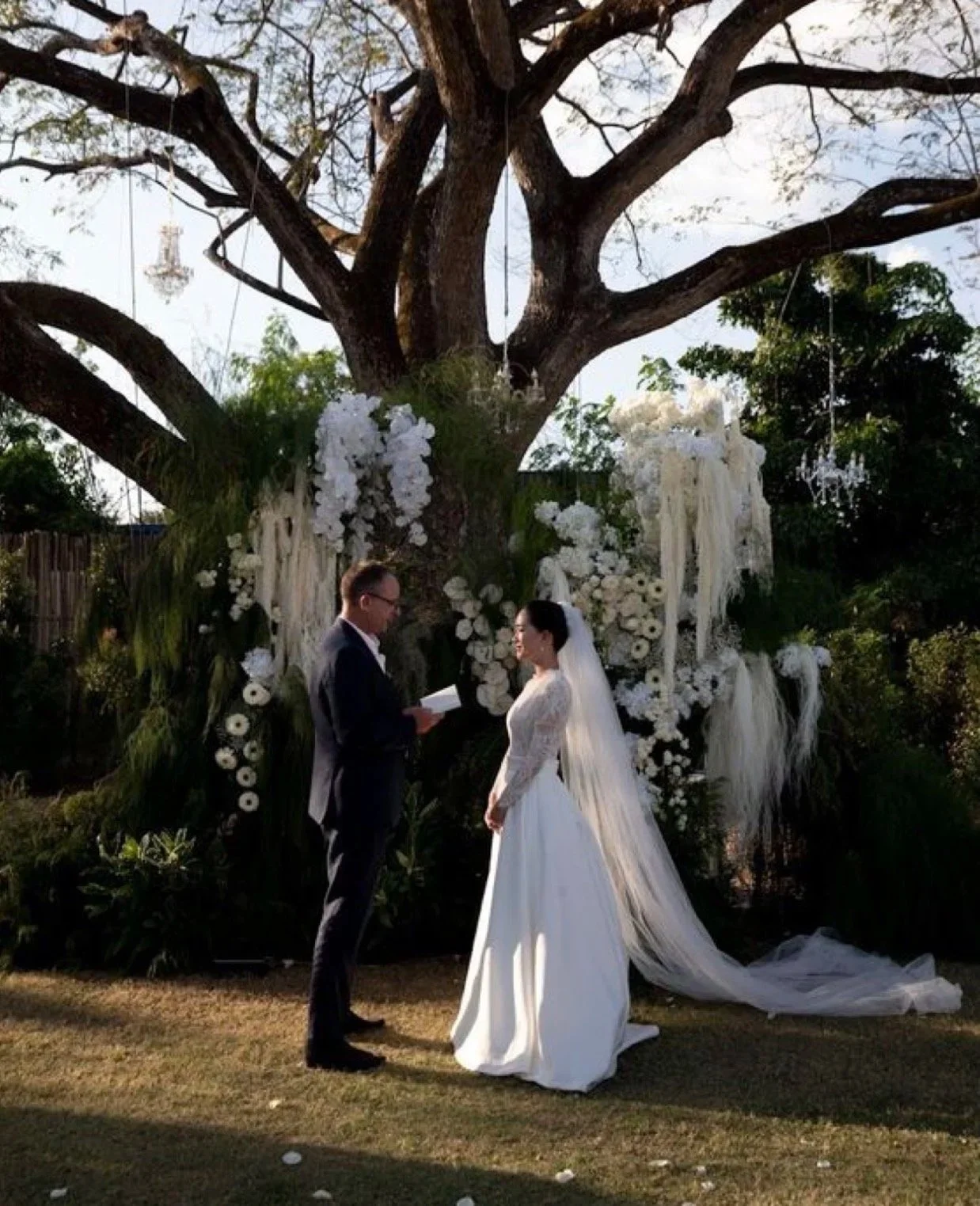
A beautiful tree doesn't necessarily need an arch placed in front of it.
An ocean view doesn't always need to be framed.
A garden doesn't automatically need another structure added to it.
Sometimes the strongest wedding ceremony design starts by looking at what is already there.
Mature trees can become natural ceremony backdrops. Florals can climb existing trunks, emerge from the ground or suspend organically from branches. Existing stonework can become an altar. A garden pathway can become an aisle.
Instead of placing wedding decor on top of the landscape, the design becomes integrated with it.
This can make a ceremony feel much more intentional to the venue because the exact same design couldn't simply be picked up and recreated somewhere else.
And that's an important distinction.
Personal wedding design isn't only about incorporating your initials, favorite colors or personal details.
It can also mean creating something that belongs specifically to that place.
When you're walking through a potential wedding venue, look beyond the obvious ceremony location.
Look at the trees.
Look at the architecture.
Look at where the light falls.
Look at the view guests will have when they turn around.
Sometimes the best ceremony backdrop is already standing there.
6. Treat Architecture Like a Canvas
Some of the most interesting wedding design opportunities aren't wedding-specific spaces at all.
They're staircases.
Hallways.
Balconies.
Columns.
Walls.
Courtyards.
Fountains.
Instead of ignoring these features while concentrating the entire design budget on centerpieces, consider whether an architectural element could become one of the defining visual moments of the wedding.
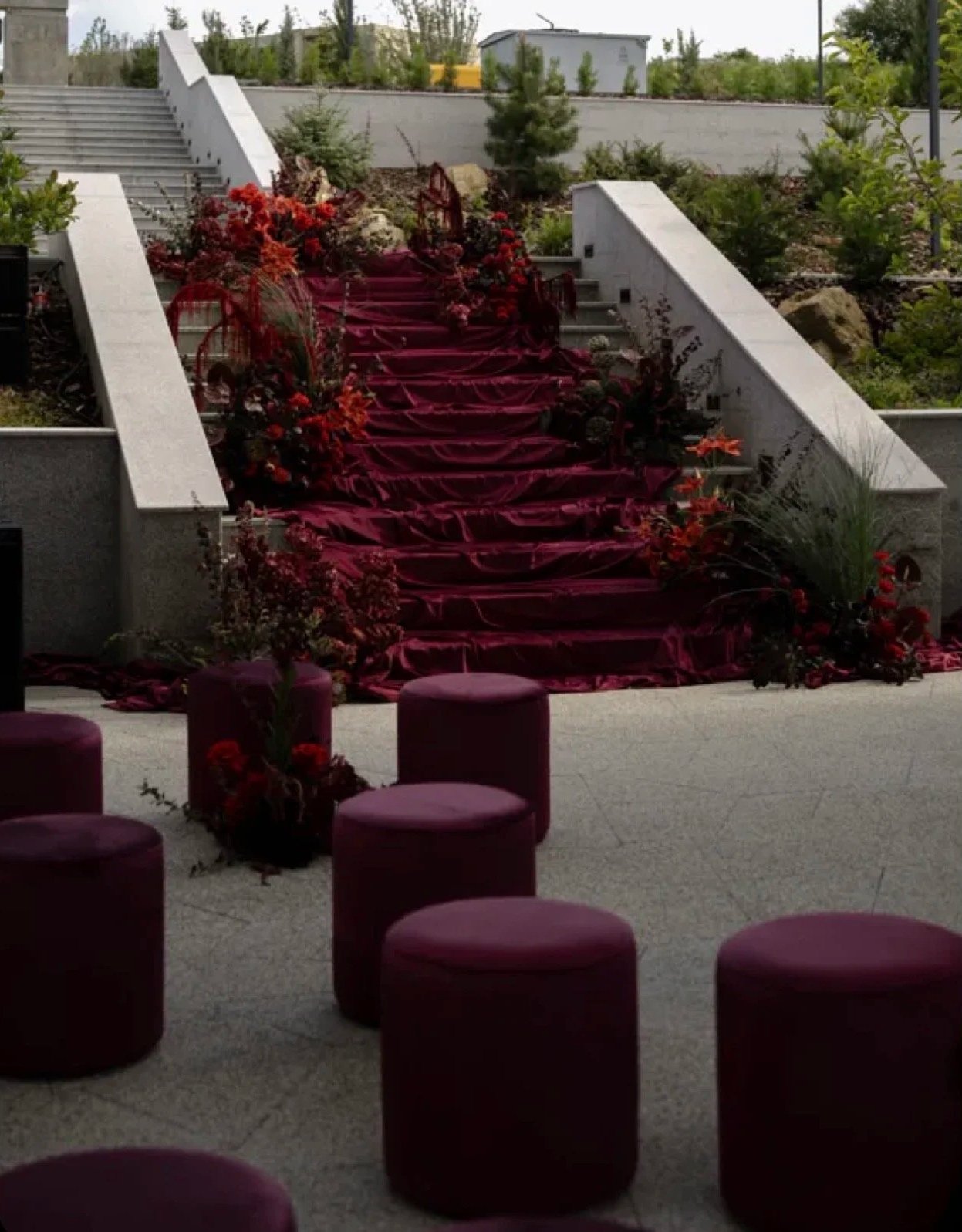
A staircase covered in richly colored fabric and surrounded by florals suddenly becomes an installation.
A hallway lined with candlelight can become an experience.
Columns wrapped in greenery can visually change an entire room.
A fountain can become the centerpiece of cocktail hour.
The architecture gives the design something to interact with, which often creates far more visual impact than simply placing additional decor into an otherwise empty space.
This is also why venue walkthroughs are so important during the design process.
A floor plan tells you where things fit.
Walking the property tells you where the opportunities are.
[INTERNAL LINK: Wedding Planning Process / About Our Approach]
7. Rethink What Ceremony Seating Has to Look Like
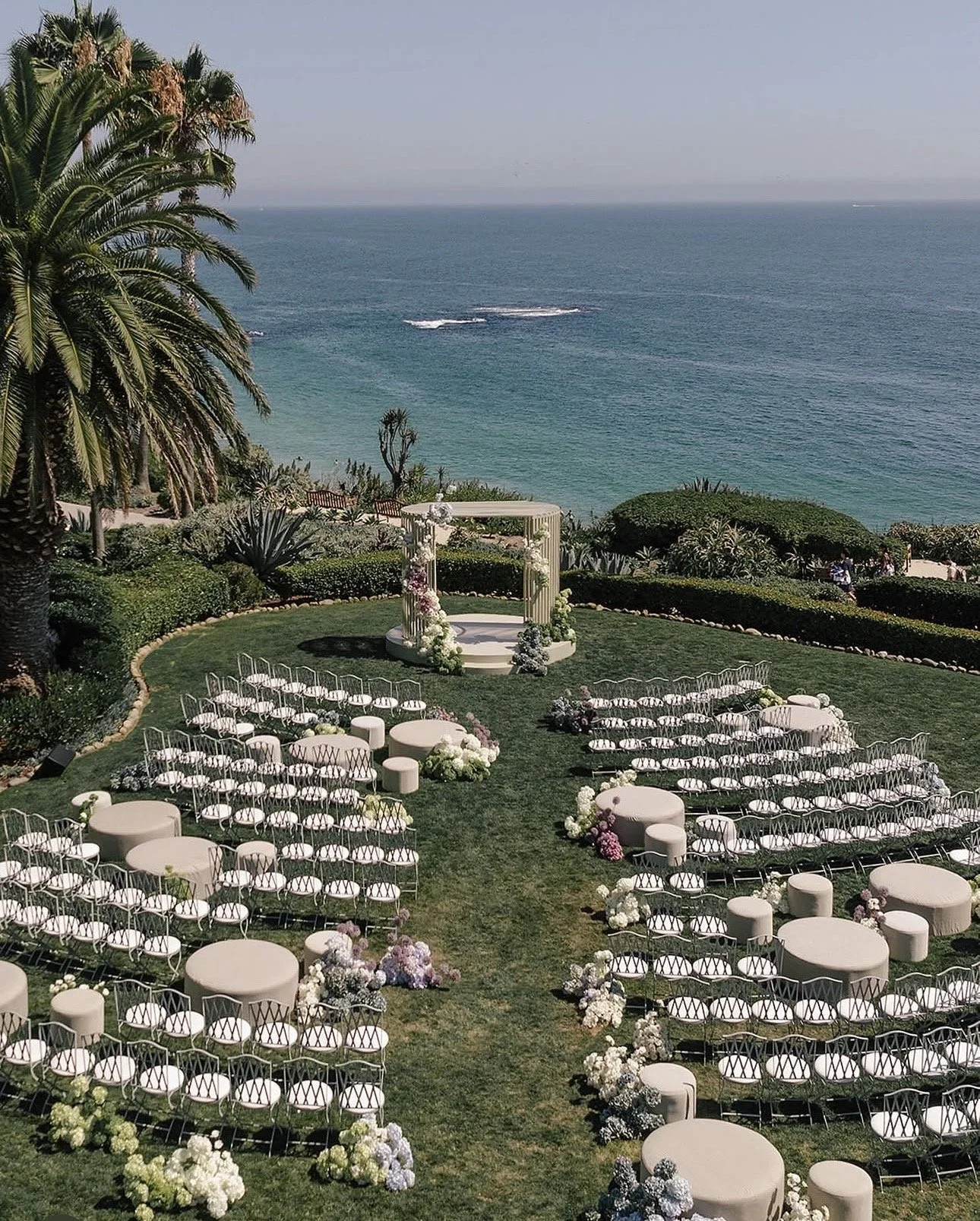
Who decided ceremony seating had to consist exclusively of identical chairs arranged in perfectly straight rows?
Traditional ceremony seating works beautifully, but it isn't the only option.
Mixing traditional chairs with upholstered benches, ottomans or lounge furniture can completely change the visual composition of a ceremony.
Instead of looking like rows of temporary seating placed on a lawn, the ceremony begins to feel like an intentionally designed environment.
Furniture can also be positioned strategically to break up large seating sections, create softer curves or add visual interest along the aisle.
There can be practical benefits too.
Certain lounge pieces may provide comfortable seating options for immediate family members or guests who need additional space, depending on the specific furniture and accessibility requirements.
The important thing is maintaining enough traditional seating and clear pathways so that design doesn't interfere with guest comfort.
That's the balance behind almost every unconventional wedding idea:
Break the visual rule without breaking the experience.
8. Use Draping as Architecture, Not Just Decoration
Fabric is one of the most transformative materials in wedding design because it can completely alter the perception of a space.
Draping can soften a tent, conceal an unattractive wall, lower the visual height of an enormous room, frame an entrance or create entirely new rooms within an open structure.
But it can also be used much more creatively.
Instead of simply covering walls, fabric can spill down staircases, sweep across ceilings, wrap architectural features or create sculptural installations.
Color changes the effect even further.
Ivory draping creates softness and romance.
Deep burgundy can feel dramatic and theatrical.
Muted blush can feel ethereal.
Layered neutrals can add dimension without introducing another major color.
The question shouldn't only be, Do we need draping?
It should be, What could fabric do to this space?
9. Stop Designing Every Table the Same Way
Uniformity can be beautiful.
But cohesion and uniformity aren't the same thing.
Your reception doesn't need 20 identical tables with 20 identical centerpieces.
One table might feature a dramatic floral arrangement while another relies heavily on candlelight. Long tables can feature smaller floral compositions that move organically down their length. Rounds might receive fuller arrangements. A head table could become its own installation.
You can even create intentional variations in linen, tabletop styling or centerpiece height while maintaining the same overall design language.
This creates a room that guests want to explore.
The key is repetition.
A color, flower variety, material, vessel, linen or candle treatment can repeat throughout the reception so everything still feels connected.
Intentional variation creates dimension.
Random variation creates clutter.
There is a difference.
10. Think About the Wedding From Every Angle
Some wedding designs are beautiful from eye level but lose their impact when you step back.
The strongest designs consider the entire environment.
What will guests see when they first enter?
What does the reception look like from across the lawn?
What will appear behind the couple during speeches?
What will the photographer capture looking down the aisle?
What does the room look like once the sun disappears?
And, increasingly, what does the design look like from above?
This is where creative floor plans, statement dance floors and intentional furniture placement become especially powerful.
A wedding can be designed almost like a composition.
There are focal points.
There is negative space.
There is repetition.
There is movement.
There are moments where the eye rests and moments designed to command attention.
You aren't simply selecting beautiful individual things.
You're deciding how those things communicate with one another.
What Actually Makes a Wedding Unique?
There is a lot of pressure surrounding the word unique.
Couples want something guests haven't seen before. Pinterest and social media constantly introduce new wedding trends. And before long, planning can turn into a hunt for the next thing nobody else has done.
But originality for the sake of originality isn't necessarily good design.
A wedding doesn't need a bizarre centerpiece or an elaborate installation simply so you can say it's different.
The better question is:
Does this choice make sense for this couple, this venue and this experience?
Unique wedding design often comes from questioning assumptions.
Why does the ceremony have to face that direction?
Why does there need to be an arch?
Why are all the tables identical?
Why can't the dance floor have a different shape?
Why are we hiding that staircase instead of designing it?
Why can't guests sit differently?
Why can't cocktail hour feel completely different from dinner?
Why are we decorating around the venue instead of using it?
Once you start asking those questions, wedding design becomes much more interesting.
Create a Wedding That Feels Like Yours
Your wedding doesn't need to look like anyone else's.
It also doesn't need to reject every tradition just to prove that it's different.
The goal is intentionality.
Keep the traditions that mean something to you. Reinvent the ones that don't. Look at your venue differently. Consider how guests will experience each transition. Invest in the elements that create the greatest impact and don't be afraid to leave something out simply because you're "supposed" to have it.
The best wedding design isn't created by filling a checklist.
It's created by understanding the couple, understanding the environment and knowing when an unexpected idea can completely transform both.
At Teardrop Wedding Events, our approach to wedding planning and design begins with the bigger picture. We look at how the venue, layout, guest experience, florals, rentals, lighting and details work together to create an environment that feels cohesive, intentional and personal.
Because beautiful is wonderful.
But memorable is better.